Plywood Coating Coverage Calculator — Epoxy, Paint & Primer
One liquid question, answered before you buy: how many gallons of epoxy resin, paint, primer or sealer does your plywood actually need? Enter an area or a 4×8 sheet count, pick the coating, set the coats — the tool outputs total volume in gallons, quarts and liters, splits first-coat absorption from later coats, and prices the job.
⚠️ Preliminary reference estimates only. Every number this plywood coating coverage calculator produces is a planning estimate built from typical manufacturer-published coverage guidance for bare plywood — it is not a specification and not a substitute for manufacturer guidance. Coating products vary widely in solids content and viscosity, so always verify against your coating product's technical data sheet before ordering.
Coating Volume Estimator for Plywood
Epoxy · paint · primer · sealer — gallons, quarts and liters out
One 4×8 sheet covers 32 sq ft per face
First sealing coat soaks into bare plywood (~100 sq ft/gal); flood coats build film (~12.8 sq ft/gal at 1/8")
Bar-top / embedment style: a sealing coat plus flood coats poured to a target cured thickness
1/8" is the common bar-top build; 1/16" suits a tough sealed skin, 3/16" a deep pour look
Includes the sealing coat — 3 is typical (seal + two flood coats)
Leave 0 or blank to skip the cost estimate
Used for the sealing coat only
Build volume comes from the target thickness
⚠ Typical estimates — check your product's data sheet. These rates are typical figures drawn from manufacturer-published coverage guidance for bare plywood, not official values.
| Coat | Role | Volume |
|---|---|---|
| #1 | Sealing coat — soaks into bare plywood | 1.28 gal |
| #2 | Flood coat — 0.063" cured | 4.99 gal |
| #3 | Flood coat — 0.063" cured | 4.99 gal |
Each 4×8 sheet is 32 sq ft: one gallon covers about 3.1 sheets as a first coat at 100 sq ft/gal, and one sheet drinks about 0.32 gal on the first pass and 2.50 gal on each later coat.
Epoxy encapsulation or coating mode: which calculation matches your job?
Epoxy is the one coating on this page with two genuinely different ways of being specified, and choosing the wrong model is the most common way a resin purchase goes sideways. The two modes in the calculator exist because epoxy jobs split into two families: thin-film finishing, where you think in square feet per gallon, and epoxy resin plywood encapsulation, where you think in cured thickness.
Coating mode (coverage-rate based) fits the thin-film family: a sealing pass over bare plywood, a clear protective skin on a workbench, a fog coat on a cabinet interior. Here the manufacturer publishes a spread rate, and the math is simply area × coats ÷ rate. One gallon of resin seals about 100 sq ft of raw plywood because the wood soaks the first pass into its outer veneers; once the surface is closed, flood coats run on pure geometry — about 12.8 sq ft per gallon at a 1/8-inch film. If your job is finish quality — smooth, thin, sanded between coats — stay in this mode.
Encapsulation mode (thickness based) fits the pour family: bar tops, river tables, embedment work, anything where the wood ends up inside a continuous cast of plastic. There the question is not “how far does a gallon spread” but “how much resin does it take to leave a film this thick”, and the answer comes from volume itself: one square foot at one inch deep holds 231 ÷ 144 = 1.604 cubic inches of resin per thousandth of area — so area × thickness × 0.6234 gives gallons directly. Epoxy resin plywood encapsulation coverage also always includes a first sealing coat that the wood absorbs and that adds nothing to the build, which is exactly why the calculator computes the sealing pass at the absorption rate and adds it on top of the thickness math. If your job is build quality — a cast layer with a measurable thickness after cure — use this mode and set the target at 1/16, 1/8 or 3/16 of an inch.
A quick sanity check with the default numbers: four sheets (128 sq ft) sealed once and poured to 1/8 inch works out to about 1.3 gallons of sealing resin plus 10 gallons of build resin — 11.3 gallons total. Run the same 128 sq ft through coating mode as a seal-plus-two-thin-coats job and the total collapses to a fraction of that. Same panel, same resin, wildly different buckets — the mode is the decision.
 Sealing coat first, flood coats second — never in one passPhoto: Unsplash
Typical coverage rates on plywood: first coat vs later coats
Every coating family publishes spread rates, and every family behaves the same way on raw plywood: the first pass soaks in and covers less, later passes ride on a sealed surface and go further. The table below collects typical manufacturer-published coverage figures for bare plywood — treat them as starting points for the calculator's editable rate fields, not as product specifications:
| Product on bare plywood | First-coat rate (sq ft/gal) | Later-coat rate (sq ft/gal) | Recommended coats |
|---|---|---|---|
| Epoxy resin — sealing / first coat on bare ply | 75–100 | — | Always first |
| Epoxy resin — flood coat at 1/8" cured | — | 12.8 | 2–3 after sealing |
| Paint (acrylic / latex) on plywood | 250–300 | 300–350 | 2 |
| Primer on bare plywood | 200–250 | 250–300 | 1–2 |
| Sealer / sanding sealer | 150–200 | 200–250 | 1–2 |
| Elastomeric roof coating on plywood deck | 50–80 | 80–100 | 2 |
Two patterns in that table are worth internalizing. First, the bare-ply penalty: a primer's published 300 sq ft per gallon over previously painted walls shrinks toward 250 on raw plywood, and an epoxy sealing coat drops to around 100, because porous face veneer absorbs the liquid that would otherwise become film. Second, the epoxy anomaly: epoxy is the only product whose later coats cover less per gallon than the sealing pass — by design. A sealing coat is inches-thin by intent, while a flood coat deliberately casts a 1/8-inch layer, and a gallon simply cannot spread 100 sq ft that thick. Paint, primer and sealer all move in the friendlier direction: coat two and beyond stretch 10–30% further than coat one.
For budgeting, the reference table doubles as a shopping list generator. Take your sheet count, read the per-coat rates, and let the calculator do the multiplication — but when you stand in the aisle, remember the ranges are wide because solids content differs between brands. Two epoxy kits with the same label volume can differ by 20% in real coverage; the technical data sheet, not the price tag, tells you which one stretches.
Surface prep before coating — and how it changes the coverage rate
Coverage rates are not properties of the liquid alone; they are properties of the liquid meeting a surface. The same gallon that manages 300 sq ft over a filled, sanded, primed panel can struggle past 220 sq ft over a fuzzy, dusty, raw sheet. Preparation is therefore not a cleanliness ritual — it is coverage-rate management, and each step moves a specific number in your estimate:
- 1Sand to knock down fuzz, not to polish. A light pass with 120–150 grit opens the surface just enough for primer and sealer to key in, and flattens the raised grain that rollers skip over. Skipping sanding costs you film where the sheet feels rough; sanding too fine (320+) can burnish the veneer and slow absorption so much that a primer sits on top instead of gripping. Bare-ply first coats on freshly sanded panels land reliably near the published figures.
- 2Vacuum and tack, because dust eats coverage. Sanding dust mixed into a brush or roller acts like a fine filler that you pay for in resin — it thickens the film, forces heavier passes, and quietly drags your effective rate down 10–20%. Vacuum, then wipe with a tack cloth or a damp microfiber and let it dry fully. On epoxy jobs especially, dust suspended in a flood coat becomes permanent bubbles and dimples to sand out later, spending more resin on the repair pass.
- 3Check moisture before you spend money. Coating a damp panel traps water under the film — blisters, cloudiness in resin, peeling paint within a season. Plywood fresh from the yard or a rainy truck bed should dry to a stable moisture reading first. And since wet wood neither absorbs nor grips predictably, the published rate simply does not apply to it; wait, and your coverage estimate stays honest.
- 4Seal the edges and cut ends every time. Plywood edges are end grain — dozens of open veneer capillaries per inch — and they wick liquid several times faster than the faces. An unsealed edge is also the entry point for water that delaminates the panel later. Edge sealing consumes little volume by area but noticeably more per square inch, which is one more reason the calculator splits first coats from later coats instead of pretending one rate fits everything.
- 5Prime or seal, then re-measure. A primed or sealed panel converts every later coat into a second-pass coating that runs 10–30% further than the published bare-wood rate. If your project has three coats ahead of it, the first coat is the expensive one and the next two are the efficient ones — adjust the later-coat rate field upward after you prime, and the total volume estimate will tighten in real time.
The workflow that ties it together: sand, vacuum, dry-check, edge-seal, then apply the absorbing first coat and sand it flat before any build or finish coats. After that first pass you own real data — one known area, one known volume — so divide one by the other and you have your own measured coverage rate for the product in your hands. Feed it back into the calculator and the remaining coats become a forecast you can actually trust.
How the calculator converts area, sheets and thickness into gallons
Under the surface, this tool runs two small formulas and three unit conversions, all worth knowing by hand so you can spot-check an order at the store. The thickness route reads: gallons = area in sq ft × thickness in inches × 0.6234. That constant comes from two facts — a square foot at one inch deep encloses 144 cubic inches, and a US gallon occupies 231 — so 144 ÷ 231 = 0.6234 gallons of liquid per square-foot-inch. It is the same conversion every resin maker quietly uses when they publish coverage by pour depth, which is why the numbers here line up with the figures printed on bar-top kits.
The coverage-rate route reads: gallons = area × coats ÷ rate, applied separately to the first coat and to every later coat because their rates differ. Everything the tool reports is derived from those two totals: quarts are simply gallons × 4, liters are gallons × 3.78541, and the estimated cost multiplies total gallons by your price per gallon. The per-sheet reference works the other direction — one 4×8 sheet is 32 sq ft, so at 200 sq ft per gallon a sheet needs about 0.16 gallons per coat, and a gallon covers about six sheets. Between the two views you can enter the store with either a bucket count or a sheet count and leave with the other number.
One caution about precision: the arithmetic is exact, but the inputs are estimates, so a result of 11.3 gallons is a decision to buy a 12-gallon plan — five-gallon pails plus a gallon can, plus a cup of humility for edges, drips and the mix you throw away in the bucket. Professionals round coverage estimates up by roughly 10% as a standing rule, and they still keep a little reserve for the repair pass nobody schedules.
Plywood sheet coverage for roof coatings and other large surfaces
Big horizontal surfaces — shed and porch roofs, deck undersides, trailer floors — are where sheet thinking beats area thinking, because the material is bought by the bundle and the coating is bought by the pail. The conversion anchor never changes: each 4×8 sheet presents 32 sq ft per face, so plywood sheet coverage roof planning starts at sheets × 32 and then multiplies by coats. Roof coatings, though, are a different animal from house paint: elastomeric and aluminum roof compounds are applied at three to five times the thickness of wall paint, and their published rates on a plywood deck run 50–80 sq ft per gallon for a first coat and 80–100 for the second. A 10-sheet roof is 320 sq ft; two coats at an average 70 sq ft per gallon is about 9 gallons, or one five-gallon pail and four gallon cans.
Three roof-specific adjustments keep the estimate honest. Slope and laps add area: pitched decks and overlapped seams can add 5–10% over the flat sheet count. Weather window matters: roof coatings cure by evaporation and most need a dry, above-dewpoint day for each coat, so budget coating days, not just gallons. And first-coat porosity is extreme on sun-baked or weathered sheathing — the first pass over chalky, grey plywood can drink half again the published rate, which is exactly the situation the calculator's separate first-coat rate field exists to model. Enter the roof rates by hand, keep the coats at two, and the gallons, quarts and liters all restate themselves.
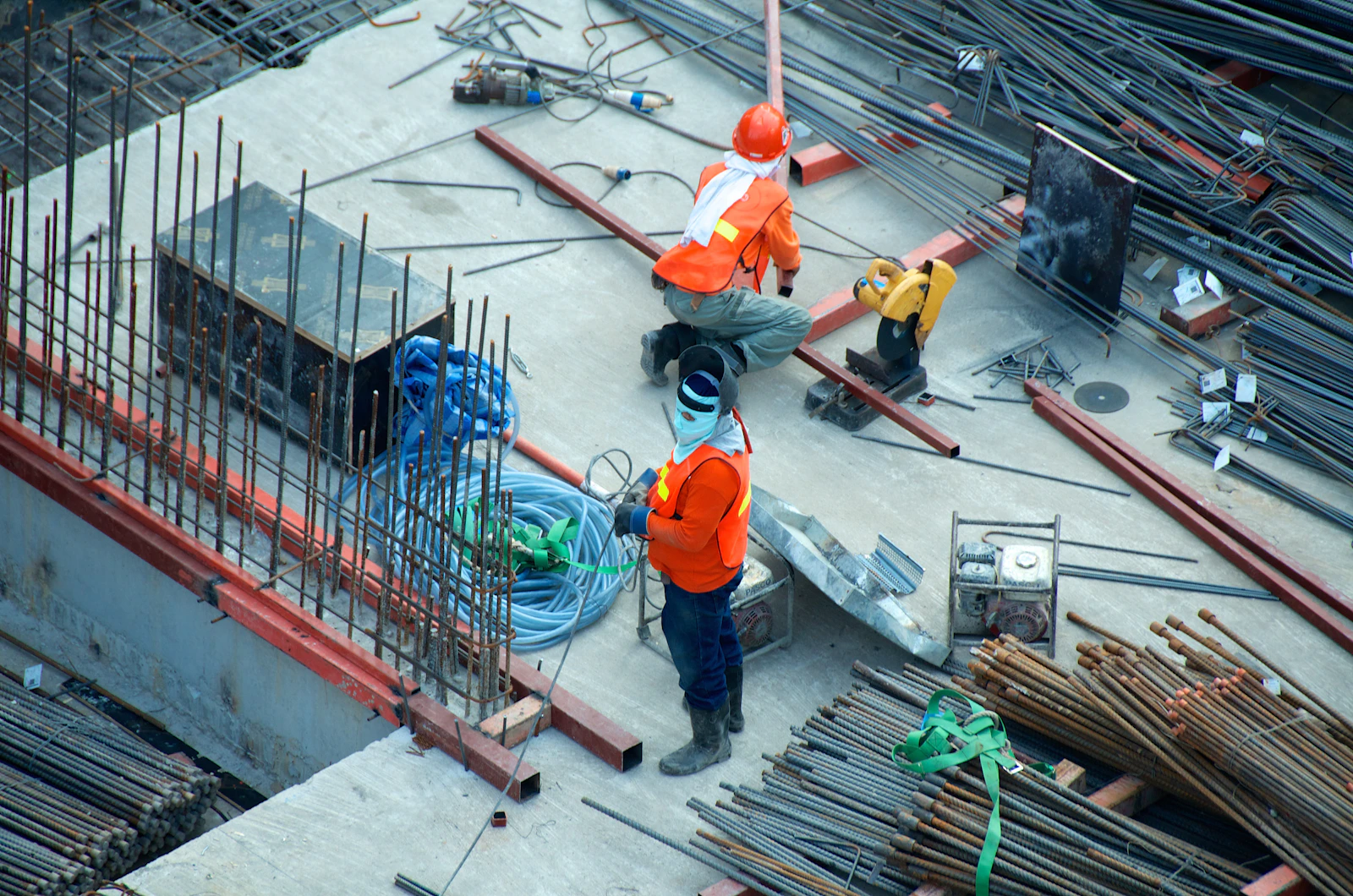 Sheets × 32 sq ft × coats ÷ rate — the whole roof in one linePhoto: Unsplash
This plywood coating coverage calculator is one tool in a full material toolkit: work out how many sheets the project needs in the first place with the free plywood calculator on the home page, then browse every sizing and estimating tool together in the plywood calculators hub — sheet counts, costs, spans and now liquid coverage, so the wood and the buckets arrive together.
Last updated: November 2026 · Published by the Plywood Calculator team · Coverage figures are typical manufacturer-published estimates for bare plywood; always verify against your product's technical data sheet.
Related plywood calculators
Plywood Weight Calculator
Estimate plywood sheet weight by thickness and material type...
Fastener & Screw Calculator
Calculate screws or nails for subfloor, wall, roof, or cabin...
Multi-Room Plywood Calculator
Add unlimited rooms, walls, and ceilings in one calculation....
Edge Banding & Seam Tape Calculator
Calculate edge banding and roof seam tape length for any ply...
Plywood Cut Calculator
Visual 2D plywood cut layout. Compare along-length vs along-...
Roof Sheathing Calculator
Roof sheathing sheets from footprint, pitch, and roof type. ...
Subfloor Calculator
Subfloor sheets for any room with joist spacing, T&G thickne...
Wall Sheathing Calculator
Wall sheathing sheets with door and window deductions. Net v...
Cabinet Plywood Calculator
Cabinet plywood by parts list — wardrobe, shelves, drawers, ...
Aquarium Plywood Calculator
Plywood aquarium builder: water volume and weight, plywood s...
Plywood Span Calculator
Shelf sag, point load, and floor load deflection for plywood...
Plywood CBM Calculator
Convert plywood sheets to CBM for freight — per-sheet cubic ...
Kerf Bending Calculator
Calculate kerf spacing, groove count, and cut depth to bend ...
Board Foot Calculator
Calculate board feet for lumber and plywood — single pieces ...
Linear Feet Calculator
Convert square feet to linear feet and back for any material...
Inch Fraction Calculator
Convert decimal inches to fractions and millimeters instantl...
Cut List Calculator
Nest a labeled parts list onto the fewest plywood sheets — k...
Plywood Sheet Sizes Chart — 4×8, 8×4, 5×5 & Metric
Every standard plywood sheet size by region — 4×8 ft, 4×9, 4...
Lumber Dimensions Chart — Nominal vs Actual Sizes
Every dimensional lumber nominal size mapped to its actual d...
Plywood Types & Grades Explained — CDX, ACX, BCX, Marine & More
Every plywood grade letter (N/A/B/C/D), the specialized type...
Plywood & Lumber Prices — Sheet Cost by Thickness and Type
What a 4×8 plywood sheet costs by thickness and grade, lumbe...
Plywood Walls Guide — Interior Wall & Ceiling Paneling
Plywood walls done right: thickness and grade per scenario, ...